Summary and Rating: Sony WH-1000XM5 vs Sony WH-1000XM6
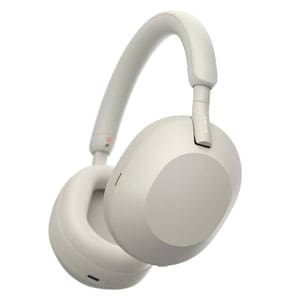
Pros – Sony WH-1000XM5
- Engaging sound for a wireless ANC headphone
- Noise canceling that set the bar at launch
- Solid multipoint with two devices
- Light, comfortable fit for long sessions
- Reliable swipe and tap controls
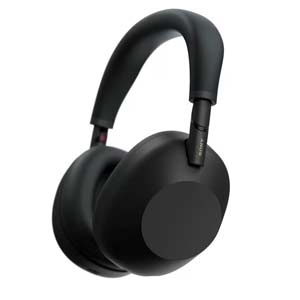
Pros – Sony WH-1000XM6
- Folding design returns with compact magnetic-closure case for better portability
- Class-leading ANC with QN3 processor and 12 mics, especially effective on voices
- Clearer calls from 6‑mic array, AI noise reduction, and a dedicated mute button
- Strong battery life (30 h rated; 32 h in real use) with very fast top-ups
- Bluetooth 5.3 multipoint, LE Audio (LC3), Auracast and spatial audio support
Cons – Sony WH-1000XM5
- Elevated bass and slightly recessed mids that benefit from EQ
- Technical detail a step below audiophile-level sound
- Non folding design and bulkier case
- Internal layout is less serviceable for long term repairs
Cons – Sony WH-1000XM6
- No water resistance / no official IP rating
- Earcup depth a bit shallow for larger ears or glasses
- ANC can pick up wind noise in strong wind
- Sound changes vs XM5 are incremental rather than dramatic
TL;DR Verdict (Quick Answer)
Best for most: The WH-1000XM6 is the most complete pick of the two for travelers and remote workers who want superb noise canceling, strong microphones, and a foldable, sturdier frame that slips easily into a bag.
Upgrade if you need: Move to the XM6 if you prioritize the quietest cabin and office experience, take frequent calls, missed folding hinges on the XM5, or want charging while listening and longer term repairability.
Skip if: If you own the XM5 and like its sound and ANC, the XM6 will feel familiar rather than transformational. If price matters, the XM5 delivers nearly the same experience for less. Neither model is designed for rain or gym use since neither carries a water resistance rating.
Introducing the Sony WH-1000XM5 and the Sony WH-1000XM6
Sony’s 1000X line has long defined premium over ear ANC. The XM5 modernized the look and nailed the fundamentals: good sound, top ANC, good battery life, comfort. The XM6 refines that formula with sturdier hardware, better portability, and a sharper microphone system.
Review Disclosure
We were not given any free items for this review. All items reviewed were personally purchased and tested by us.
We test each pair of headphones using a mix of real-world listening and precise lab measurements. This includes evaluating performance in both quiet and noisy environments.
We run objective tests for things like frequency response, driver matching, and distortion, while also paying close attention to subjective qualities like dynamic range, stereo imaging, and how immersive the sound feels. The result is a review that’s both technically accurate and truly useful for everyday listening.
See our Testing Protocol for more information.
Sony WH-1000XM5
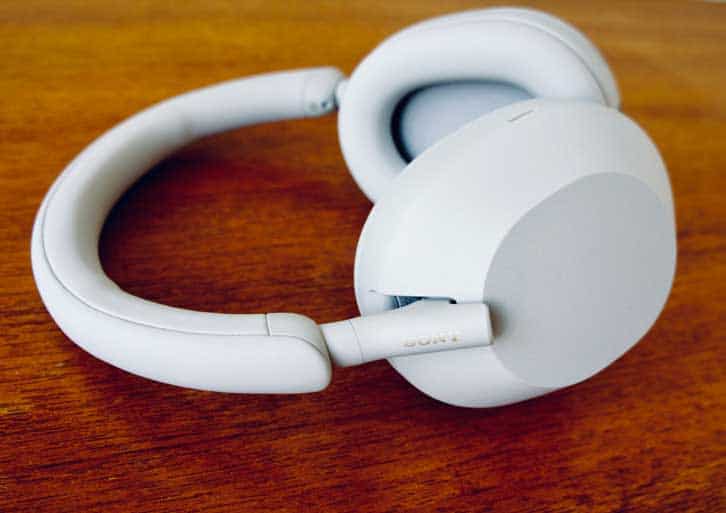
The WH-1000XM5 in white
Sony WH-1000XM6
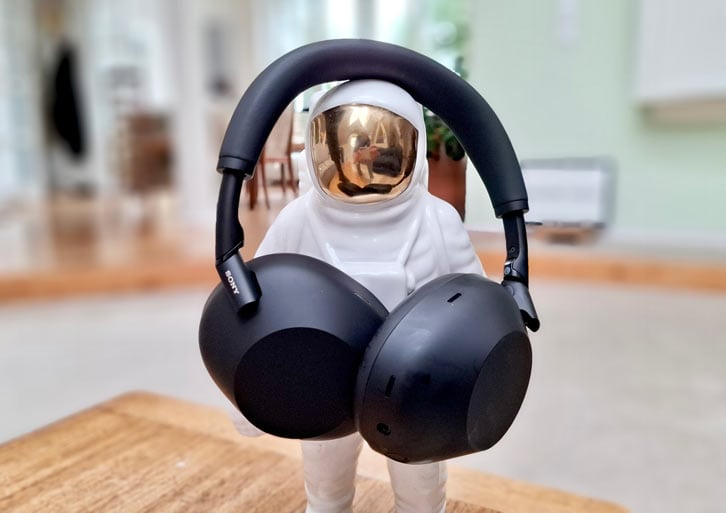
Check out our gear category page for more on headphones and audio gear.
Alternatives to these Headphones
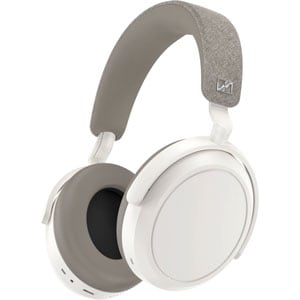
Sennheiser Momentum 4
Best value ANC headphones in our book. Very good sound, massive 60-hour battery life.
Check Price:
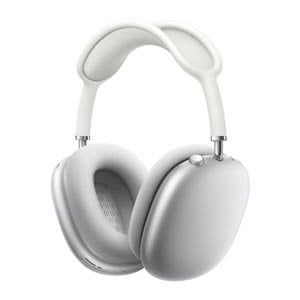
AirPods Max
Apple’s elegant over-ear, ANC Cans. ANC on par with the XM5, very comfortable with excellent audio performance.
Check Price:
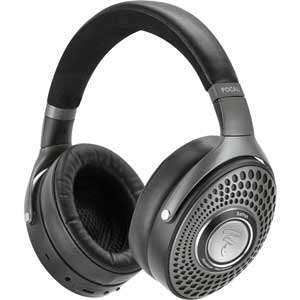
Focal Bathys
Best ANC headphones for audiophiles – dynamic punch, excellent resolution.
Check Price:
Sound Quality Comparison: Sony WH-1000XM5 vs Sony WH-1000XM6
Frequency Response Diagram Sony WH-1000XM5
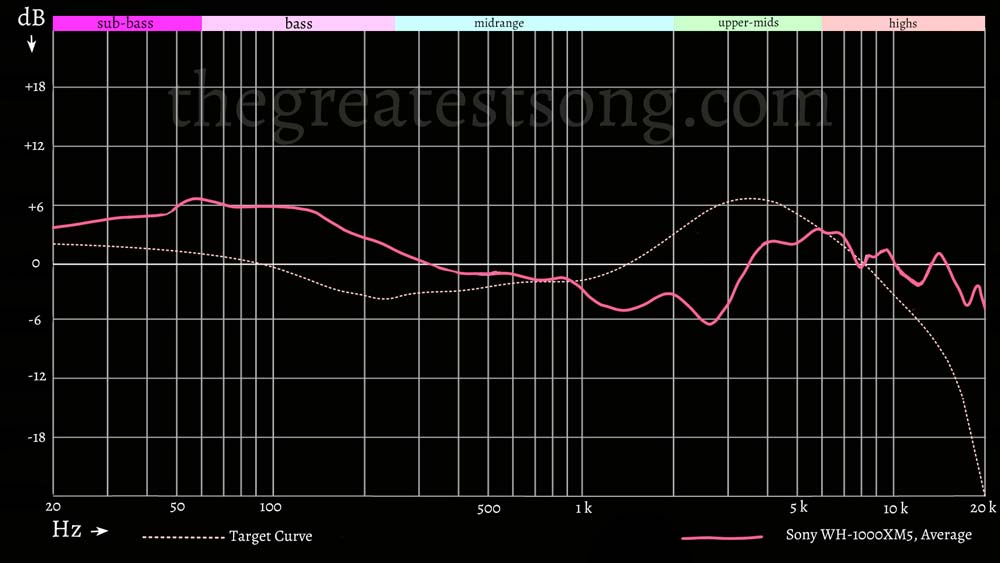
Frequency Response Diagram Sony WH-1000XM6

Default tuning and tonal balance (lows/mids/treble)
Both headphones share the house recipe, a warm tilt with energetic bass, relaxed treble, and easygoing mids. They are both pleasing to listen to, but falling short of a true audiophile experience. They both could use some separation of the sub-bass and bass regions, and both suffer from a bit of bass bloat.
Out of the box the XM5 gives you plenty of thump that can blur the lower mids on bass heavy songs. The XM6 trims that bloat slightly, keeping impact while freeing voices and guitars from the low end’s shadow.
Midrange presence is smooth on both, but improved on the XM6. With a bit more response in the 2-3 kHz region, the XM6 lifts clarity just enough that vocals seem closer and lyrics intelligibility improves at modest volumes.
Treble remains polite and warm. The XM6 softens sporadic hot spots that could surface on the XM5, which helps with long listening sessions at higher volume without fatigue.
Neither model aims for studio neutrality. Both respond well to EQ. A small bass shelf cut, a gentle lift in the presence region (on the XM5), and a modest bite above ten kilohertz can produce a more balanced presentation if that is your preference.
Detail, dynamics & soundstage
Resolution is solid for a wireless ANC design. Mostly due to its frequency response, the XM6 separates foreground and background parts more cleanly in dense arrangements, so backing vocals, rhythm guitars, and percussive details are easier to locate.
Dynamically, neither of these cans has incredible range but both deliver a satisfying kick drum and weighty synths, and both hold together at loud volumes without obvious strain. The XM6 can reach a slightly higher volume ceiling cleanly, which may matter if you listen lower in the operating range of a phone and want a bit more headroom.
Soundstage is average for a closed can. You hear a reasonable left to right spread and stable center image, but depth remains compact.
The XM6 adds head tracking for compatible spatial formats, which can make movie watching feel more anchored to the screen, though the effect is software driven rather than a change to physical staging.
Wired vs. Bluetooth vs. USB-C audio differences
Both include a 3.5 millimeter input. Passive mode keeps them playing if the battery is empty, though ANC and EQ turn off. With power on, the DSP continues to work while using the cable, so you get noise canceling and your EQ curve even when plugged into a seatback screen or laptop.
Wireless performance is the main event. On Android, LDAC delivers high bitrate audio that is tough to distinguish from a good wired feed in everyday conditions. On iPhone, AAC is the standard and still sounds clean and full with these drivers.
Neither headphone accepts digital audio over USB-C. The XM6 does allow listening while charging, which is a real advantage on long travel days.

The WH-1000XM5
Specs Compared
Sony WH-1000XM5
- Driver – 30 mm dynamic drivers.
- Frequency Range – 20 Hz – 20 kHz
- Cable – 3.5 mm audio cable, USB-A to USB-C charging cable
- Weight – 250 g
- Impedance – 48 Ω (1 kHz) (with cable, headset ON) 16 Ω (1 kHz) (with cable, headset OFF)
- IP Rating – no IP rating
- Battery Life – Up to 30 hours with ANC on; up to 40 hours with ANC off.
- Bluetooth Version – 5.2
- Codecs Supported – SBC, AAC, LDAC
Sony WH-1000XM6
- Driver – 30 mm dynamic drivers.
- Frequency Range – 20 Hz – 20 kHz
- Cable – 3.5 mm audio cable, USB-C to USB-C charging cable
- Weight – 254 g
- Impedance – 48 Ω (1 kHz) (with cable, headset ON) 16 Ω (1 kHz) (with cable, headset OFF)
- IP Rating – no IP rating
- Battery Life – Up to 30 hours with ANC on; up to 40 hours with ANC off.
- Bluetooth Version – 5.3
- Codecs Supported – SBC, AAC, LDAC, LC3
Build, Comfort & Fit: XM5 vs XM6
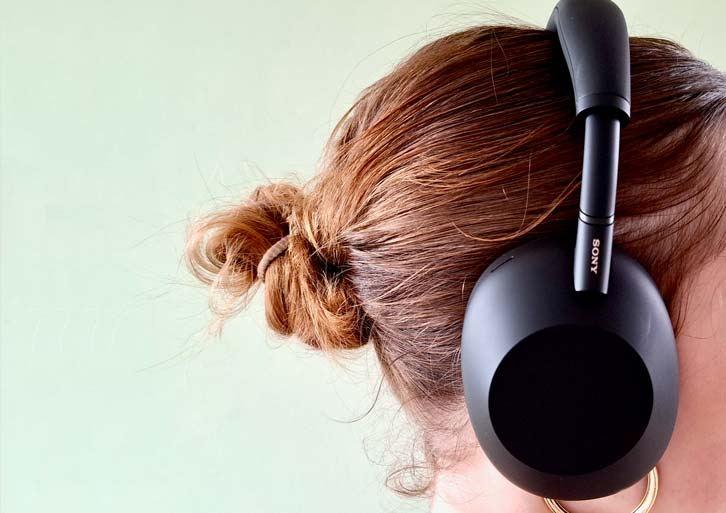
The WH-1000XM6
Build
The XM5 arrived with a sleek, non folding silhouette that looked clean but took up room in a backpack. Its matte plastics and muted logo treatment kept things understated. The compromise was portability, since the earcups only swiveled flat and the included case had to match the larger footprint.
The XM6 puts folding hinges back in play. The arms tuck inward, the case is slimmer, and the headphones occupy far less space in a carry on or daypack.
The XM6 hinge and slider assemblies feel more robust, with visible metal reinforcement that inspires confidence when you extend or collapse the band. Day to day, the XM6 feels denser in a good way, like it was designed to be folded a thousand times without complaint.
Both land around a quarter of a kilo, and both use 30 millimeter dynamic drivers. The XM5 combined the V1 system on chip with a QN1 noise canceling processor. The XM6 adopts a newer canceling engine that pairs with updated Bluetooth silicon to enable LE Audio features later.
Materials remain primarily plastic for lightness, with just enough metal where it matters to handle torsion and repeated adjustment.
Comfort & Fit
Clamp force is gentle on both, and neither squeezes unduly. The XM6 spreads weight more evenly across the crown with a flatter headband, which helps during marathons of listening. The XM5’s pads are a touch firmer and deeper, often keeping ears away from the driver cover for larger ears.
Seal quality can vary by head shape. The XM6 pads are soft and conform easily, yet their shallower depth can lead to brief seal breaks if you adjust your glasses or chew. The XM5 pads feel a bit more consistent with frames, though the tradeoff is a slightly more direct pressure on the jaw for some users.
Clamp Force, weigh distribution: Both aim for a relaxed clamp, with the XM6 distributing vertical pressure more broadly so hotspots are less likely. Side pressure on the temples is mild. The XM5 can feel fractionally tighter, which some listeners prefer for a locked in seal.
30/60/120-minute wear tests: After thirty minutes both models disappear from notice. At an hour the XM6’s headband proves its advantage, as the top of the head remains comfortable. By two hours both remain viable, but the XM6 is kinder at the crown while the XM5 can maintain a more stable seal for some face shapes.
Glasses and small/large heads fit notes: Thin frame glasses work well on both. Thick temples can break the seal more often on the XM6 due to pad softness. Small heads benefit from the XM6’s even weight spread, while very large heads may appreciate the XM5’s deeper pads that keep ears off the liner.
Repairability & Sustainability
Serviceability is where the XM6 steps forward. The battery housing and USB C port are secured with screws rather than adhesive, and the pathway to those parts is more straightforward. That makes long term ownership less risky, since common wear items can be replaced if they fail.
Sony also leans harder into recycled plastics and fiber based packaging on the XM6.
A Battery Care toggle lets you cap charge at eighty or ninety percent to slow capacity loss over years of use. Both models accept replacement earpads, but the XM6’s modular approach extends deeper into the chassis than before.
For more information, see the complete user guide of the WH-1000XM5 or the user guide of the WH-1000XM6.

Sony WH-1000XM5 in its case
Connectivity & Codec Behaviour
Bluetooth Version & Multipoint
The XM5 runs Bluetooth 5.2 with multipoint for two devices at once. The XM6 moves to Bluetooth 5.3, which brings efficiency gains and unlocks LE Audio features as ecosystems catch up. Both swap between a laptop and phone quickly when a call arrives or a video starts, which makes them easy daily drivers.
Codec Support
Codec coverage is similar with an XM6 twist. Both support SBC, AAC, and LDAC. The XM6 adds LC3 for LE Audio, which is designed for better quality at lower bitrates and for broadcast use cases like Auracast.
Android users get maximum fidelity out of both of these headphones by using LDAC. Unfortunately, you cannot use LDAC on iPhones. iPhone users are limited to the AAC codec as neither headphone supports aptX variants.
Android vs. iPhone experience (LDAC vs. AAC)
Both headphones work seamlessly with Android or iPhone platforms. On Android you can enable LDAC and choose a quality or stability preference. At its higher settings LDAC can sound indistinguishable from wired in many contexts.
On iPhone the connection defaults to AAC, which still sounds very good and keeps latency modest for video. In loud environments the codec difference becomes hard to notice, while in a quiet room with careful listening LDAC holds an advantage.
Multipoint stability & handoff behavior
Both headphones handle two devices gracefully. Music on a laptop pauses when a phone call rings, then resumes afterward without fuss.
When moving out of range and returning, the XM6 tends to re establish the second link a bit faster, which reduces the number of times you need to dig into Bluetooth menus.
Gaming/video latency tests
Streaming video is fine on both, since modern apps sync picture and sound well. Competitive gaming is less ideal over Bluetooth, because action sounds trail visuals by a perceptible beat.
Use the cable for twitch titles, or accept the slight delay for casual play. LE Audio could help the XM6 down the road once low latency profiles are common.

The WH-1000XM6 folds tighter than the XM5 in its case.
Active Noise Cancellation (ANC) Face-Off
Low-Frequency Rumble (planes, buses)
Both models are superb at taming deep engine drone and road rumble. The XM6 trims a bit more of the sub bass murmur and does it with slightly less pressure on the eardrum, which makes a long flight feel calmer.
On buses and subways we heard a steadier hush with the XM6, so music at low volumes stayed audible without cranking the dial.
Midrange chatter (offices, cafés)
This is where the XM6 steps ahead. Office conversation and cafe clatter are reduced more decisively, so voices around you blur into a softer background.
The XM5 remains very good, yet it allows a touch more speech to peek through when music is paused.
If your priority is muting meetings, open offices, or family noise at home, the XM6 carves out the clearest personal bubble.
High-frequency hiss (HVAC, keyboards)
Consistent hiss from HVAC systems and the sharp clicks of keyboards are difficult to erase. The XM6 smooths more of that top end distraction than the XM5.
Neither removes it completely, but the XM6 turns those sounds into a less intrusive wash. Dish clatter and jingling cutlery in a kitchen also recede further with the XM6, which helps speech and podcasts stay intelligible.
Wind handling & transparency mode
Gusty wind still challenges both designs. Light breezes are handled better by the XM6, while strong gusts can cause turbulence noise on either model. Transparency on the XM6 sounds clearer and less processed, which helps with brief conversations and announcements without taking the headphones off.
Commuters who hop between trains and sidewalks will appreciate the XM6’s more natural pass through and its quicker reaction when switching between ANC and ambient.
Battery & Charging
Battery Life of Popular ANC Headphones Compared
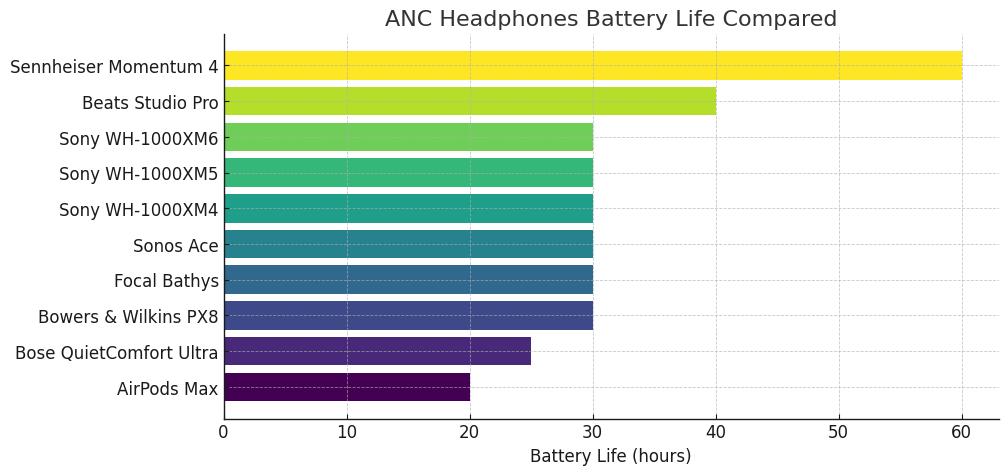
Battery life is solid for both headphones. With ANC enabled you can plan on roughly thirty hours, enough for a work week of commuting and calls. With canceling off, the XM5 stretches unusually far in some scenarios, while the XM6 typically lands closer to the forty hour mark, which is still excellent.
Charging is fast. A modern USB PD charger can provide hours of playback from only a few minutes on the cable, and both fully recharge in about three hours. Quick top ups before leaving the house are practical, and you rarely need to worry about running flat if you plan ahead.
The XM6 adds a small but crucial convenience. It will keep playing while it is plugged into power, which solves an XM5 annoyance where charging meant silence.
The Battery Care setting on the XM6 helps preserve capacity by avoiding constant one hundred percent charges, a thoughtful touch for daily users who keep their headset charged at a desk.
Microphone & Call Quality
For our call tests, we tested in normal and windy conditions.
Quiet room clarity
In a quiet office both models transmit speech that sounds clean and natural. The XM6 captures a fuller tone with better low mid body, which helps your voice carry authority in meetings without sounding boomy.
You can hear the results below in our tests. The WH-1000XM6 have the best performance on calls of any over-ear headset we have tested.
Street noise suppression
Out in a city the XM6 isolates speech more confidently. Traffic, voices, and air handlers are pushed down so the person on the other end hears mostly you.
The XM5 still performs well, yet it lets more ambient sound peek around your voice when the background gets chaotic.
Wind performance
As you can hear in our simulated tests below, in heavier wind both can struggle, and there are moments where the XM5’s processing keeps your voice steadier while the XM6 clamps down more aggressively.
If wind is a constant problem, cupping a hand near the mic ports helps both.
Sony WH-1000XM5
Sony WH-1000XM6
Smart Features & App Experience
Sony’s headphones lean heavily on software to enhance daily use. Adaptive Sound Control automatically shifts between noise canceling and ambient modes based on your activity or location, and the XM6 adds head tracking for supported spatial content, keeping audio pinned to the screen for more natural immersion.
Everyday interactions are smoothed by wear detection, which pauses and resumes playback when you remove or put on the headphones, and by speak-to-chat, which momentarily lowers audio so you can converse hands-free—faster and more reliable on the XM6 thanks to improved microphones.
Customization also extends to button mapping for noise control modes or voice assistants, while the XM6 introduces a dedicated mute key and streamlined pairing and device-finding.
Updates still require downtime through Sony’s app, but they’ve been stable, and the XM6 is expected to benefit from longer support and upcoming LE Audio features.
Which One Should You Buy? (Decision Guide)
Choose XM6 if…
You want the most thorough noise canceling available, you take many calls in mixed environments, or you want a folding design that packs small without feeling fragile. It is also the smarter pick if you care about listening while charging, Battery Care options, and a chassis built with modular parts that are easier to service later.
Both the XM5 and XM6 are great all-rounders. If audio performance is your highest priority, the Focal Bathys are still the top performers. For the best battery life, the Momentum 4 are the best on the current market with 60 hours.
Choose XM5 if…
you want a flagship ANC experience for less money. It delivers very similar sound and nearly as much canceling power, and its slightly deeper pads may suit larger ears or thick frame glasses better. If you mostly work at a desk and travel occasionally, the non folding design is not a major drawback.
Already own XM5 – is XM6 worth it?
If the XM5 still satisfies you, the XM6 will not feel revolutionary. Upgrade only if the folding frame, clearer calls, or the extra edge in canceling voices would change your daily experience. Otherwise, wait for a later generation.
FAQ
Is the Sony WH-1000XM6 a significant upgrade over the XM5?
It is a meaningful refinement that strengthens ANC, portability, durability, and call quality, while keeping a similar sound and comfort profile.
Do XM6 and XM5 sound different out of the box?
They are close, with the XM6 sounding a bit cleaner in the upper-mids and with slightly improved bass control.
Which has better mic quality for calls and meetings, XM5 or XM6?
The XM6 has the advantage, producing fuller speech and reducing background noise more effectively in busy spaces.
XM6 vs. Bose QC Ultra vs. Momentum 4 – best ANC?
The XM6 is the most comprehensive overall for canceling across the spectrum, while Bose remains a close rival on low frequency rumble and Momentum 4 trails slightly.
Can I use LDAC on iPhone?
No, iPhone uses AAC with these headphones. Use LDAC on Android for maximum quality, and stick with AAC on Apple devices for convenience and low latency.
Do both the XM5 and XM6 support USB-C audio and airline adapters?
Neither plays audio over USB-C. Both work with the included analog cable, and you can use a simple airplane adapter if needed.
Are the ear pads interchangeable between XM5 and XM6?
Yes, the pads attach the same way and can be swapped between models, though pad firmness can subtly influence seal and tonal balance.
Questions or Comments?
Follow the discussion here on Facebook.
Testing Protocol
Testing Conditions and Methods
- Headphones, earbuds, and IEMs are tested in:
- A sound-treated (quiet) room.
- A noisy environment (to evaluate passive and active noise cancellation).
- Audio content used includes a wide range of music genres.
- Technical testing includes:
- Frequency response
- Dynamic range
- Driver matching
- Harmonic distortion
- Binaural performance
- Wiring quality
- Stereo imaging
Measurement Tools
- For frequency response:
- Over-ear and on-ear models: MiniDSP EARS measurement rig
- IEMs and earbuds: IEC-711 compliant coupler
- Call quality tests simulate wind noise using fans under controlled settings.
Rating Criteria
Ratings are based on the following priority:
- Sound quality (highest priority)
- Comfort and build quality
- Price (least weight)